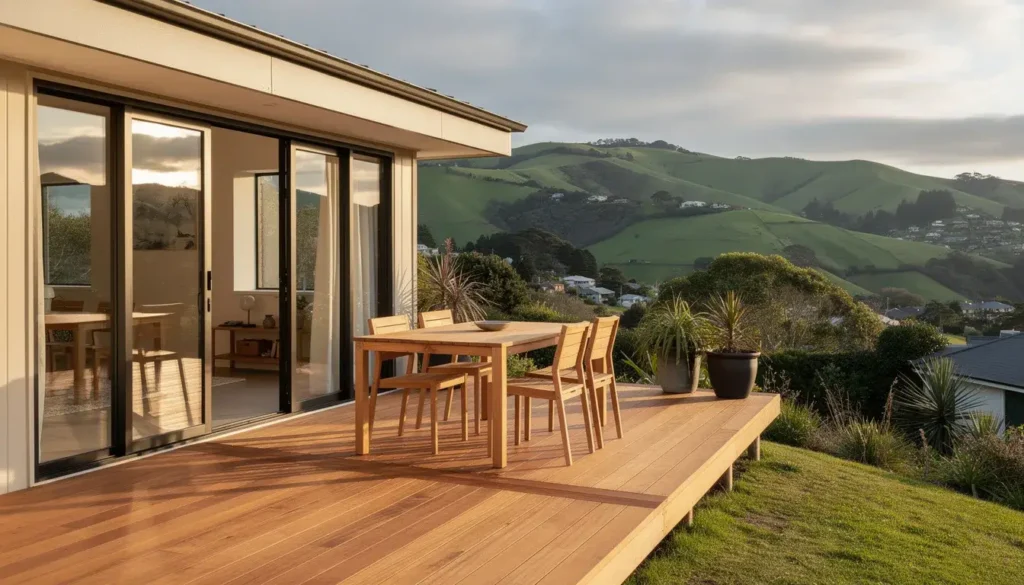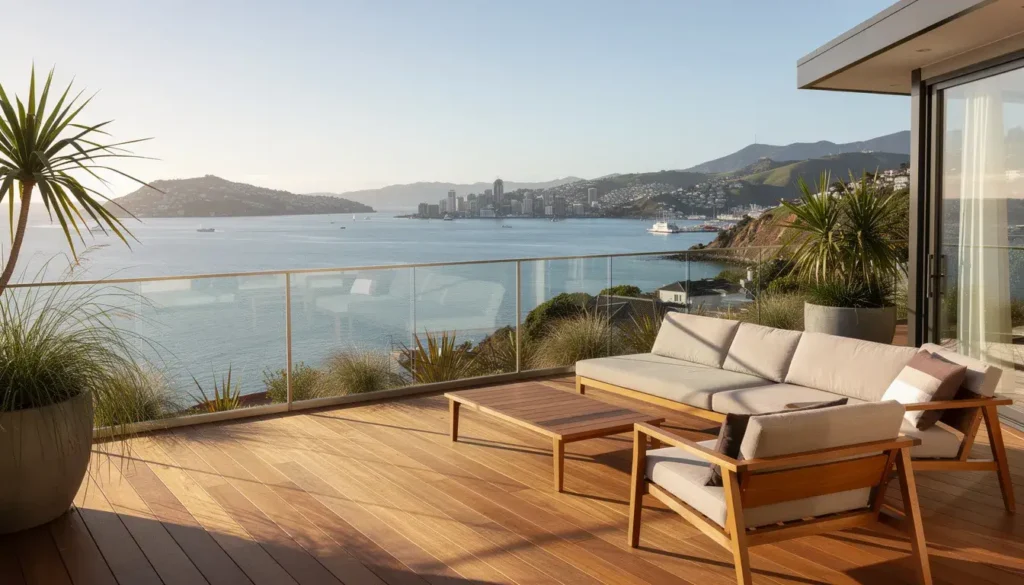
Welcome to your ultimate guide on choosing the best decking for Wellington weather! Whether you’re dreaming of a stylish outdoor living space or a durable deck that can withstand the region’s challenging climate, you’ve come to the right place. Here, we provide expert insights, practical advice, and detailed comparisons to help you find the perfect decking material that combines natural beauty, durability, and minimal maintenance. Let’s transform your outdoor space into a stunning and resilient retreat that thrives in New Zealand’s unique weather conditions.
Table of Contents
Key Takeaways
- Wellington’s high winds, heavy rainfall (1200-1300mm annually), and strong UV rays mean your decking material must deliver excellent moisture resistance, UV stability, and structural resilience to last.
- Composite (WPC), hardwoods like garapa and vitex, and correctly treated pine (H3.2/H4) are the most practical choices for Wellington homes.
- Composite decking is generally the best low maintenance option for Wellington’s climate, while hardwoods suit those wanting a natural look and willing to invest in regular maintenance.
- Council rules, especially for decks approaching 1.5m high, and exposure to coastal winds around Wellington Harbour should influence both your material and design choices.
- This guide will help you match decking type to your budget, site exposure (coastal vs sheltered), and desired maintenance level.
Wellington homeowners know their city doesn’t go easy on outdoor spaces. Between the relentless northerlies, sudden southerly storms, and UV exposure that catches many off guard, choosing the best decking for wellington weather isn’t just about aesthetics—it’s about survival. Get it wrong, and you’ll be replacing warped boards and dealing with rot far sooner than you’d like. Get it right, and you’ll have a beautiful deck that handles everything this city throws at it for decades.
This guide breaks down exactly which decking materials perform in Wellington’s demanding conditions, how to match them to your specific site, and what maintenance each option realistically requires.
Why Wellington Weather Demands The Right Decking
Wellington earns its “Windy Wellington” nickname for good reason. The capital sits at the meeting point of Cook Strait winds, delivering a relentless combination of strong northerlies and southerlies, frequent heavy rain events, and surprisingly intense UV exposure during the warmer months.
- Average wind speeds in exposed suburbs like Newlands, Brooklyn, and Karori regularly exceed 25 km/h, with storm gusts reaching 100 km/h or more
- The region receives around 1200-1300mm of rainfall annually, spread across more than 170 rainy days per year
- Summer UV exposure from November to March is particularly harsh due to New Zealand’s position under the ozone hole
- Temperature swings from 5°C to 25°C happen rapidly, sometimes within a single day
These conditions attack decking materials from multiple angles. Moisture drives rot, mould, and mildew. Repeated wet-dry cycles cause cupping, warping, and dimensional instability. Strong UV rays fade finishes and degrade timber fibres. High winds work on loose boards and poorly secured fixings.
For Wellington, “best decking” means balancing moisture resistance, UV stability, slip resistance in wet conditions, and structural resilience against wind loads.
Coastal areas deserve special attention. Properties around Oriental Bay, Petone, Eastbourne, and Island Bay face salt-laden air that accelerates corrosion of metal fixings and breaks down unprotected timber faster than inland sites. The salty air creates an additional layer of harsh weather conditions that your decking material and hardware must withstand.
Top Decking Options For Wellington’s Climate
When it comes to outdoor flooring that performs in New Zealand’s climate, three main categories stand out for Wellington properties: composite/WPC, hardwoods (garapa, vitex, kwila), and treated pine.
- Composite/WPC decking suits those prioritising low maintenance and long-term performance
- Hardwood decks suit premium installations where natural timber aesthetics matter
- Treated pine suits tight budgets, DIY projects, and sheltered locations
All options require appropriately treated framing—typically H3.2 for above-ground structures and H4 for posts near or in the ground. Corrosion-resistant fixings are non-negotiable given Wellington’s wet and windy conditions.
The sections below break down each option’s performance. A later comparison will help you weigh upfront cost, lifespan, and maintenance frequency based on your lifestyle and budget.
Composite / WPC Decking: Best All‑Rounder For Wellington
Wood-plastic composite (WPC) decking combines recycled wood fibers with polyethylene or PVC polymers, creating a waterproof shell that handles Wellington’s conditions better than most alternatives.
- High resistance to moisture swelling and rot, with water absorption rates under 0.1% compared to timber’s much higher uptake
- Excellent dimensional stability under Wellington’s rapid temperature swings, maintaining shape through wet-dry cycles
- No splintering, making it ideal for family decks and pool surrounds
- Naturally resistant to borer, termites, and other insect attack
- Compressive strengths exceeding 30 MPa, well above treated pine’s 10-20 MPa
Capped or co-extruded composite boards offer superior stain and fade resistance under Wellington’s strong uv rays. Unlike traditional wood, they retain around 90% of their original colour after five years of exposure, compared to 60% for untreated timber. This makes them ideal for north and west-facing decks that cop the strongest afternoon sun.
Realistic lifespan expectations run to 25-30 years with minimal upkeep. Brands like Ekodeck, developed specifically for New Zealand conditions, offer 25-50 year warranties backed by accelerated weathering tests. Maintenance typically involves an annual wash-down with soapy water—no regular oiling or staining required.
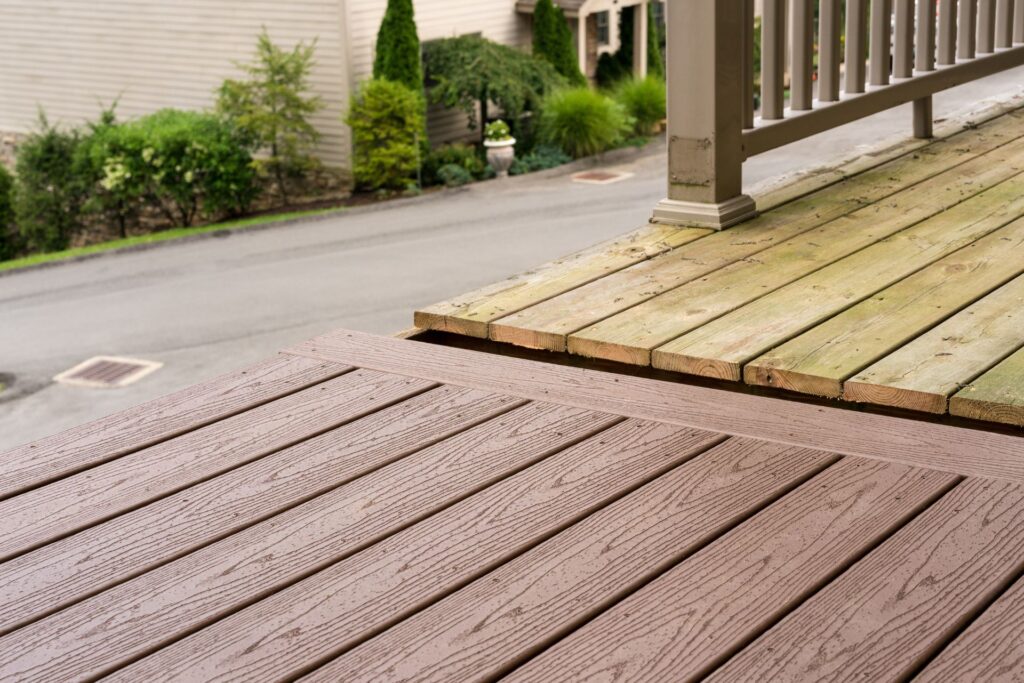
Aesthetically, composite materials now come in colours that mimic popular New Zealand timbers like kwila and vitex, as well as modern greys that suit contemporary Wellington architecture. The wood grain textures have improved dramatically, though keen eyes will still notice the difference from natural wood.
Hardwood Decking (Garapa, Vitex, Kwila)
For those who value the natural beauty and warmth of natural timber underfoot, hardwood remains the premium choice for exposed Wellington decks.
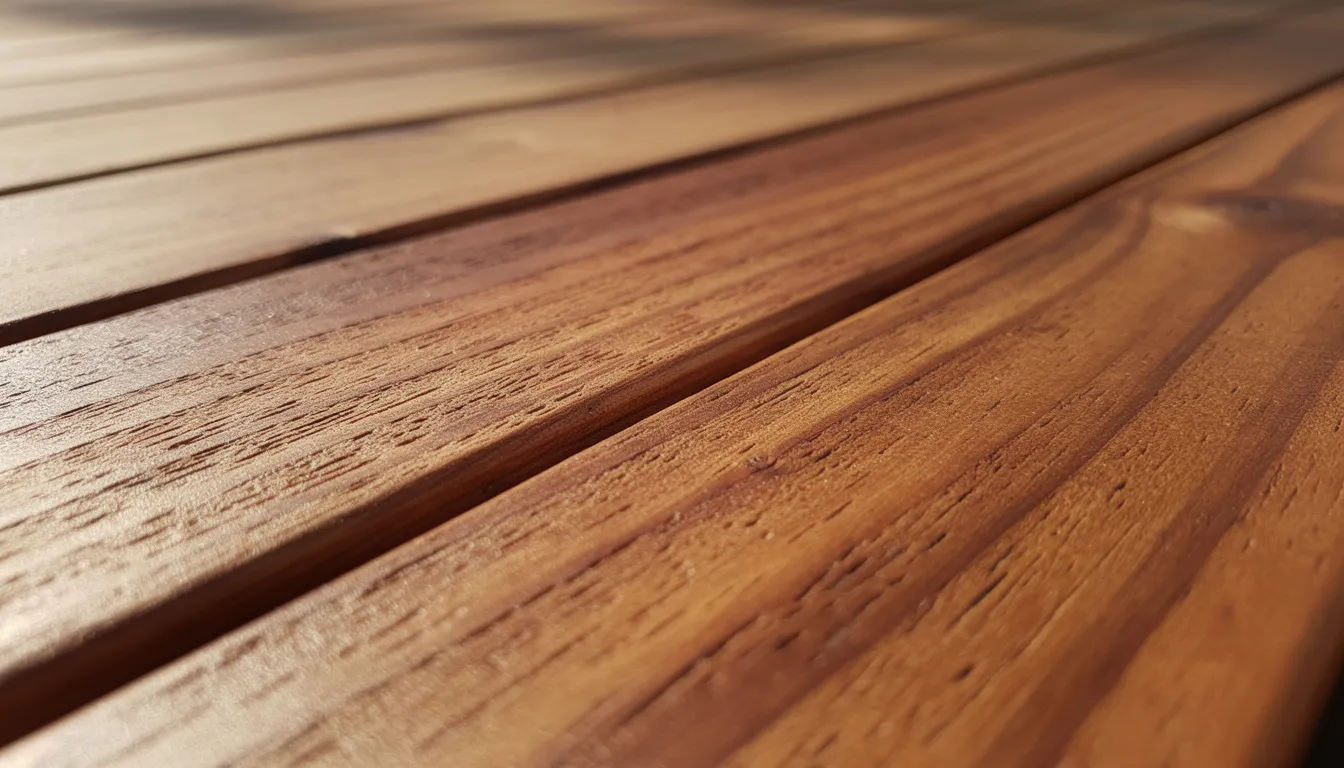
Garapa performs exceptionally well on Wellington’s coastal hillsides and damp, shaded sites. Its dense grain and natural resistance to decay (Janka hardness around 1400 lbf) mean it handles repeated wetting without the movement you’d see in softer species. With regular oiling, it weathers to an attractive silver-grey or maintains its golden tone with UV-protective treatments.
Vitex has been popular around New Zealand since the 1990s, offering a lighter, contemporary aesthetic that suits many Wellington renovations and new builds. Sourced from Solomon Islands plantations with lower environmental impact than some alternatives, it exhibits superior mould resistance due to its tight grain—a real advantage in Wellington’s damp conditions.
Kwila decking delivers the rich reddish-brown finish many homeowners love, with high durability classified at class 1-2 for above-ground use (15-25+ years lifespan). However, kwila can leach tannins initially, which stain nearby paving, pool surrounds, or concrete in rainy Wellington winters. Initial oiling helps manage this, but it’s worth considering if your deck adjoins light-coloured surfaces.
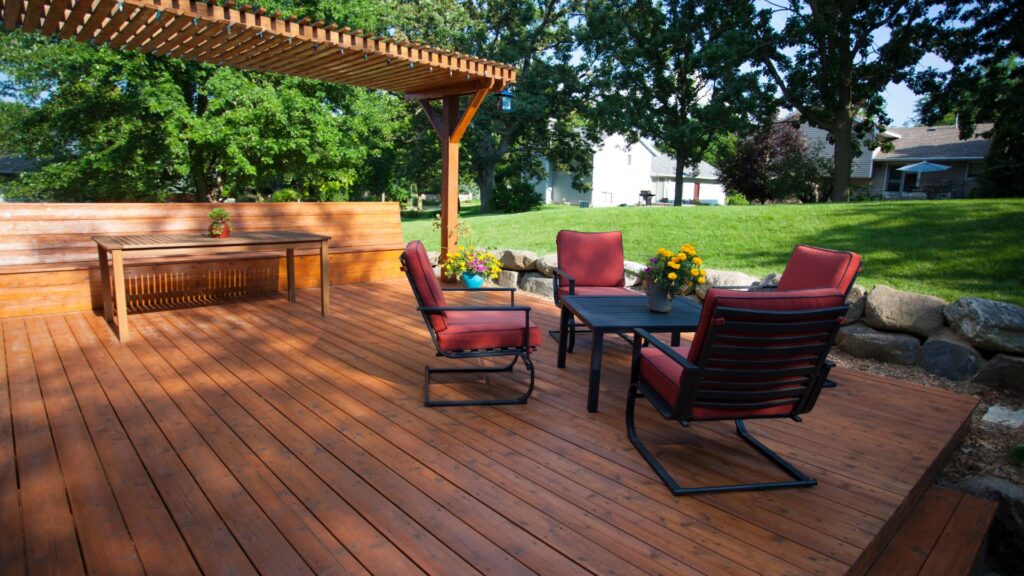
Hardwood decks can last 25+ years in Wellington when oiled every 6-12 months, kept clean of moss and lichen, and built with correct detailing for good drainage. This timber type is better suited to homeowners prepared for regular maintenance who prioritise the authentic feel of real decking timber underfoot.
Treated Pine Decking
H3.2 treated radiata pine remains Wellington’s most budget-friendly decking option, commonly seen on family homes and rental properties across the region.
- Treated via copper-chrome-arsenic (CCA) or alkaline copper quaternary (ACQ) preservatives to achieve hazard class 3.2 durability
- Costs around NZ$10-20 per linear metre versus hardwoods at NZ$15-40
- Achieves 10-15 year lifespans when correctly maintained
Pine decks perform adequately in Wellington when correctly treated, installed with good ventilation underneath, and regularly sealed or stained. However, the material is more prone to movement and surface checking in exposed locations. Case studies from local deck builders wellington show pine decks failing within 6-12 months under full sun exposure and heavy rain if not properly maintained.
Pine works well for sheltered urban courtyards and lower-level decks where budgets are tight and easy board replacement is acceptable. It’s also a practical option for interim decks on properties awaiting renovation.
Ongoing maintenance is essential: annual cleaning, re-staining every 1-2 years, and close monitoring of end-grain and fixings in particularly wet or windy spots. For exposed hill suburbs, pine decks require significantly more attention than alternatives.
Wellington Weather Factors To Consider Before You Choose
Not all Wellington properties face the same conditions. Before selecting your decking material, assess these key local factors.
Wind exposure varies dramatically across the region. Hill suburbs like Karori, Wadestown, and Khandallah experience consistently higher wind speeds than sheltered valleys like Lower Hutt or Wainuiomata. High-exposure sites need rigid framing, closer joist spacing (often 400mm centres rather than 600mm), and more secure fixings to prevent board movement.
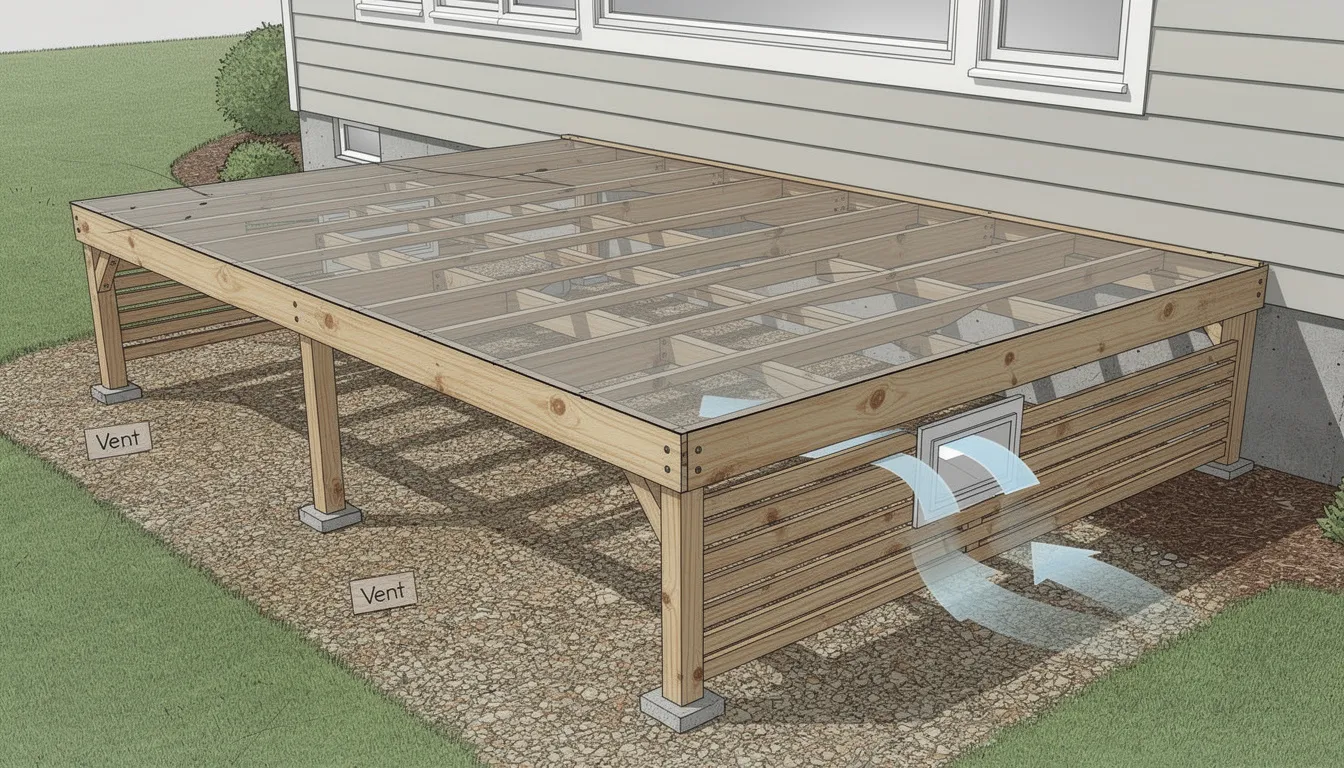
Rainfall and drainage demand attention everywhere in Wellington. Frequent downpours mean decks need fall for water runoff (typically 1:100 minimum slope), appropriate gap spacing between boards (usually 5-6mm), and materials that tolerate repeated wetting and drying cycles without excessive movement. Moisture buildup under decks accelerates decay, so ventilation underneath matters.
Sun exposure affects different sites differently. North and west-facing decks cop intense sunlight from November through March, making UV-stable materials and finishes critical. Without uv protection, timber greys by 50% within two years. East and south-facing decks stay cooler but often remain damp longer.
Coastal and harbour influence increases corrosion risk for all metal components. For properties in Oriental Bay, Island Bay, Seatoun, or Eastbourne, stainless steel or hot-dip galvanised fixings and brackets are strongly recommended—standard zinc-coated hardware corrodes quickly in salt-laden air.
Microclimate issues like shaded, damp south-facing decks stay wet longer and benefit from extremely durable materials (composite or dense hardwood) and anti-slip textures. These sites see faster mould and lichen growth, requiring more frequent cleaning regardless of material choice.
Composite vs Timber In Wellington: Which Is Best For You?
There’s no single right choice for every Wellington property. The decision between composite decks and a timber deck comes down to your priorities.
| Factor | Composite/WPC | Hardwood | Treated Pine |
|---|---|---|---|
| Upfront cost (installed) | NZ$100-150/m² | NZ$60-90/m² | NZ$40-60/m² |
| Annual maintenance cost | NZ$0-50 | NZ$200-500 | NZ$150-400 |
| Realistic lifespan | 25-30 years | 20-30 years | 10-20 years |
| Maintenance frequency | Annual wash only | Oil every 6-12 months | Stain every 1-2 years |
| Weather resistance | Excellent | Very good (with care) | Adequate (with care) |
Cost trade-offs: Composite typically runs higher upfront per square metre than pine, and similar to or slightly above quality materials like garapa or vitex. However, lifecycle analysis shows WPC delivering around 40% savings over 20 years compared to hardwood when you factor in maintenance costs—a significant consideration for Wellington homeowners planning to stay long-term.
Maintenance comparison: Composite needs mainly washing versus hardwood and pine requiring regular cleaning plus oiling or staining to cope with rain, wind-blown debris, and UV. In Wellington’s conditions, this difference adds up to significant time and money over a deck’s life.
Feel and look: Natural timber offers variation, warmth, and that authentic natural look that many find irreplaceable. Composite provides a uniform, splinter-free, barefoot-friendly surface particularly helpful for family decks with young children and pool areas.
Best use cases:
- Composite for high-exposure sites, busy family decks, and residential and commercial properties where minimal upkeep matters
- Hardwood for statement decks where natural aesthetics are the priority and owners will invest in proper care
- Pine for small or interim decks on a tight budget, or sheltered sites with easy access for maintenance
Safety And Comfort In Windy, Wet Conditions
Safety-focused design choices matter for Wellington decks.
- Textured composite boards or grooved hardwood profiles provide better slip resistance on decks exposed to sea spray, drizzle, or southerly storms
- Moss and lichen build up quickly on shaded timber; capped composite is easier to keep clean and less slippery when maintained
- Secure balustrades and bracing on elevated decks are essential to handle gusty wind loads common on ridgelines and coastal slopes—loose boards become dangerous in high winds
- Lighter colours in full-sun locations reduce surface heat buildup during bright Wellington summer afternoons; darker composite can reach 50°C versus around 40°C for lighter options or natural timber
Design And Installation Tips For Long‑Lasting Wellington Decks
Correct design and installation matter as much as material choice in Wellington’s demanding environment. Quality materials won’t save a poorly built structure.
- Use at least H3.2 treated framing for above-ground deck structures and H4 for any posts in contact with or close to the ground, per NZ building practice
- Ensure adequate ventilation under the deck to help timber dry between rain events and reduce mould and decay—particularly important on south-facing slopes
- Choose stainless steel screws for coastal sites and high-quality coated screws elsewhere in Wellington to combat corrosion from salt and wind-driven rain
- Plan for water management: slight fall away from the house, appropriate spacing between boards, and keeping drains and scuppers clear of debris
- Complex or elevated decks, especially those close to or above 1.5m high, should be designed or checked by a professional to meet Wellington City Council or Hutt council structural requirements
For multi level decks or challenging sites, engaging professional deck building services ensures the structure handles Wellington’s wind loads and complies with local building codes.
Local Compliance And Council Considerations
New Zealand Building Code and local council rules apply to your deck project.
In Wellington and surrounding councils (Hutt, Porirua, Kapiti), decks over approximately 1.5m high or attached in certain ways to the dwelling typically require building consent. Rules vary by council and specific design, so always confirm with your local authority before building.
Handrails, balustrade heights, and stair design have defined standards ensuring safety in Wellington’s wind and wet conditions. These aren’t optional—they’re legal requirements.
Document the materials, treatment levels, and fixings used during construction. This helps with council sign-off and future resale questions about your wellington property. Many buyers now ask for this information, and it can add to your property value.
Maintenance Strategies For Wellington Decks
Even the best decking timber in Wellington needs some care due to constant exposure to wind-blown dirt, salt, and rain. The right approach depends on your material.
Annual schedule for all decks:
- Autumn clean to remove leaves and debris before winter storms
- Spring inspection for movement or damage after winter storms
- Reapplication of oils or stains as needed for timber
For composite decks:
- Regular sweeping to remove grit and debris
- Annual wash with mild detergent and soft brush
- Attention to removing embedded grime blown in by Wellington winds
- No oiling, staining, or sealing required
For hardwood and pine:
- Wash the deck thoroughly before recoating
- Check for raised nails or screws and re-fix as needed
- Re-oil or re-stain to protect against UV and moisture
- Increase frequency after particularly harsh winters
In shaded or damp areas, using a deck cleaner targeting mould and lichen is often necessary to maintain a safe, non-slip surface. Products containing sodium percarbonate work well without damaging timber.
Common Wellington Deck Problems And How To Avoid Them
- Cupping and warping from repeated wetting and drying in windy conditions—use stable materials (composite or dense hardwoods) and correct board spacing to allow movement
- Corrosion of fixings near the harbour and south coast—use stainless hardware and inspect regularly for rust, replacing affected screws before they fail
- Mould and algae growth on shaded decks—ensure good airflow underneath, clean regularly, and use appropriate anti-fungal treatments
- Fading and greying of timber under strong Wellington UV—apply UV-resistant oils or stains and maintain realistic expectations about natural weathering
- Loose boards in gusty conditions—use appropriate fixing patterns and check annually before winter storms
Conclusion: Matching Decking To Your Wellington Home
Creating your dream outdoor space in Wellington means choosing materials that work with the climate, not against it.
Composite/WPC emerges as the most weather resistance and low maintenance option for exposed Wellington sites. Unlike traditional wood, it handles the constant rain, wind, and UV without the ongoing upkeep. For those prioritising the aesthetic appeal and warmth of natural timber, hardwoods like garapa and vitex deliver excellent performance with proper care. Treated pine remains viable for budget builds and sheltered locations where regular maintenance is feasible.
Before deciding:
- Assess your site’s exposure—coastal versus sheltered, sunny versus shaded
- Be honest about how much maintenance you’re willing to commit to
- Consider long-term costs, not just upfront prices
- Factor in your style preferences and whether the natural look of outdoor timber matters to you
Engaging a local Wellington decking specialist who understands regional weather patterns, council rules, and material performance in real local projects can make all the difference between a perfect deck and ongoing frustration. Many offer a free consultation to assess your site and discuss options for your new deck.
Whether you choose timber decking for its natural beauty or composite for its minimal maintenance, the right choice matched to your wellington property and lifestyle will deliver an outdoor living space you’ll enjoy for decades—even through Wellington’s wildest weather.
Frequently Asked Questions
This section addresses common Wellington-specific decking questions not fully covered above.
How long will a deck last in Wellington’s climate?
With good design and upkeep, composite decks typically last 25-30 years in Wellington conditions, often with only minor colour change. Hardwood decks achieve around 20-30 years when oiled regularly (every 6-12 months) and kept clean. Treated pine decks last roughly 10-20 years depending on exposure—sheltered sites at the higher end, exposed hill locations at the lower end. All figures assume correct installation with appropriate framing treatment and corrosion-resistant fixings. Decks in highly exposed coastal positions may see shorter lifespans at the lower end of these ranges.
What is the best decking material for coastal Wellington suburbs?
For suburbs like Island Bay, Seatoun, Eastbourne, and Oriental Bay where salty air attacks both timber and metal, composite decking or dense hardwoods like garapa and vitex are the top choices. Both offer excellent resistance to the combination of salt, moisture, and UV these sites experience. Equally important is using stainless steel fixings and brackets throughout—standard galvanised hardware corrodes quickly in salt-laden conditions. If choosing hardwood, plan for more frequent oiling (every 6 months rather than annually) to maintain the timber’s protective oils against salt damage.
Do I need council consent for my deck in Wellington?
Decks under approximately 1.5m high often don’t require building consent, but rules vary by council and specific design details. Wellington City Council, Hutt City Council, Porirua City Council, and Kapiti Coast District Council each have slightly different requirements. Factors like attachment method to the house, proximity to boundaries, and whether the deck is enclosed can all affect consent requirements. Always confirm with your specific local authority before building—a quick call or email to the council can save significant problems later. For elevated or complex builds, engaging a designer or builder familiar with local rules is worthwhile.
Will my deck be usable through Wellington’s wet and windy winters?
With slip-resistant surfaces, proper drainage, and regular cleaning, decks can be safely used year-round in Wellington. Composite decking and well-maintained hardwood offer the best underfoot performance when wet, with textured surfaces achieving slip ratings suitable for frequent rain. The key is preventing moss and algae buildup, which creates slippery conditions regardless of material. Cleaning your deck before winter and maintaining clear drainage ensures you can step outside even through the coldest, wettest months. Adding outdoor furniture that handles moisture (teak, aluminium, or all-weather wicker) extends your outdoor space use through winter.
Which deck colours work best in Wellington’s sun and wind?
Mid-tone and lighter colours reduce heat buildup on sunny days and better hide the wind-blown dust and grit that Wellington sends onto every horizontal surface. Darker boards and timbers can reach temperatures uncomfortable for bare feet in summer sun, and show fading more quickly under Wellington’s intense sunlight. If you prefer darker tones, consider them for shaded areas or be prepared for colour maintenance. For natural timber, accepting the silver-grey patina that develops over time eliminates the ongoing battle to maintain original colour—many Wellington homeowners come to appreciate this weathered look as part of their deck’s character.
Conclusion: Choosing the Best Decking for Wellington Weather
Selecting the best decking for Wellington weather means balancing durability, maintenance, and aesthetic appeal to create an outdoor living space that lasts and looks great. Composite or WPC decking stands out as the top choice for those seeking a highly durable, low maintenance, and eco friendly choice that withstands Wellington’s harsh winds, heavy rainfall, and intense UV exposure. For homeowners who value the natural beauty and warmth of timber, hardwood decks like garapa, vitex, and kwila offer excellent performance with proper care and regular maintenance. Treated pine remains a practical option for sheltered locations and budget-conscious projects but requires more upkeep and attention.
Understanding your site’s exposure to coastal salt air, wind intensity, and sunlight is crucial in selecting the right timber and decking material. Engaging professional deck builders Wellington trusts ensures your deck is designed and installed to meet local climate challenges and council requirements, providing excellent customer service and expert advice tailored to your needs.
With the right choice of materials, quality installation, and ongoing care, your new deck will enhance your Wellington property’s curb appeal and provide a beautiful, functional outdoor space for years to come—ready to withstand New Zealand’s weather and become your dream outdoor space.